

Youth in Custody
Create positive futures for kids in your care. Applications now open to join our Youth in Custody Certificate Program!
In the past decade, we have learned a tremendous amount about how and where to best serve youth involved in the youth legal system and related systems of care. For example, research shows that low- and moderate-risk youth are best served in the community in non-residential placements that offer better outcomes and lower costs. For higher-risk youth who require residential placements, facilities should be safe and operate according to best practices stemming from research-based guiding principles. While research has shown the youth justice field “what works” for this population, it is often difficult for youth legal agency and facility staff to reform their policies and procedures to align with best practices. Most efforts to date have focused on ensuring that low- and moderate-risk youth are not committed to facilities, but less attention has been paid to best practices for serving the high-risk youth who are in the custody of the youth legal system.
The Youth in Custody Certificate Program shines a light on the complex and serious needs of these youth, serving as a venue for leaders to develop capacity, effectuate change, and begin or accelerate system improvements to better serve this population. The training provides an interactive and dynamic learning environment with instruction from national experts on cutting edge ideas, policies and practices from across the country. Specifically, the program integrates research-based and implementation-tested best practices around culture change and leadership, evidence-based tools to assess youth’s risks and develop individualized case plans, supporting positive relationships between and among staff and youth, shaping facility’s physical environment, delivering effective programming and treatment, as well as strength-based approaches and re-entry support.
An Updated Program That Meets the Needs of Youth and Agencies Today
In 2026, the Youth in Custody Certificate Program will be offered in a hybrid format that combines a two-day in-person convening with a series of virtual training and Capstone working sessions that span over a 12-month period. Recognizing the unprecedented staffing and operational challenges youth facilities face in 2026, this hybrid format is designed to build staff capacity and provide extended support for participating teams without compromising facility safety and security. This model allows jurisdictions to design and launch their initiatives while maintaining necessary coverage on the units.
Overall Engagement Timeline:
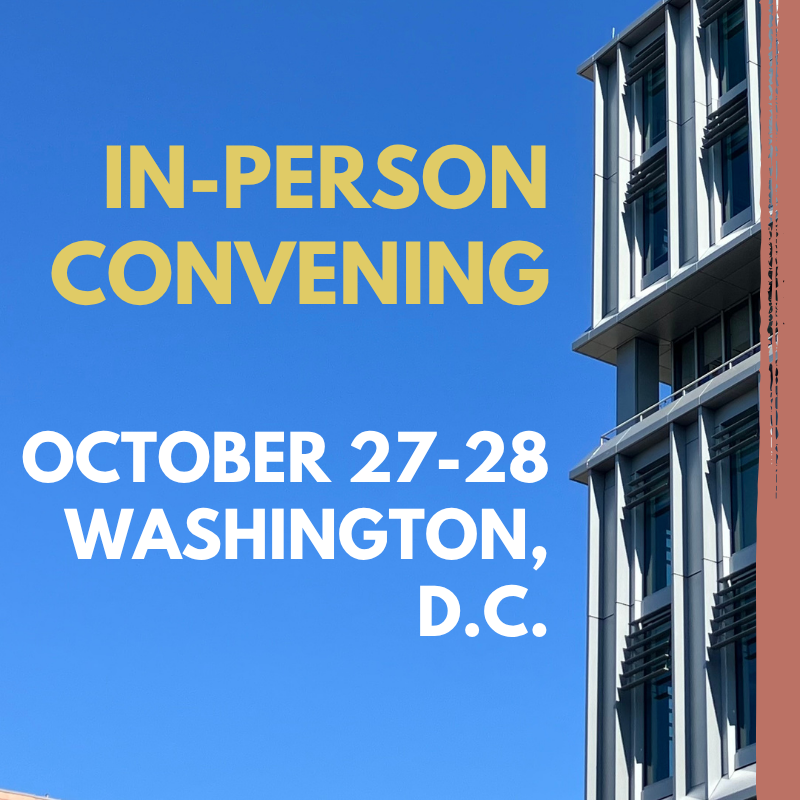
In-Person Convening
Dates: October 27-28, 2026 at the Georgetown University Capitol Campus in Washington, D.C.

Virtual Sessions
Five virtual sessions held once per month from December 2026 through May 2027. Each session will include substantive content and structured Capstone planning time.

Capstone Presentation
A virtual cohort Capstone presentation and lessons learned session will be held in May 2027
Additional virtual technical assistance will be available to support early-stage implementation and troubleshooting as teams begin to carry out their Capstone Projects. In order to receive the executive certificate, participants are expected to attend the in-person convening, actively participate in the virtual presentation session in May 2027, and be present for at least four of the five virtual sessions between December 2026 and May 2027.
Curriculum
While the program focuses heavily on the change process that is needed to advance initiatives related to youth in the custody of the youth legal system after case adjudication, the curriculum has also been found to be beneficial for teams looking to improve their policies and practices in detention facilities. Case studies and other interactive learning techniques will help participants apply their learning to situations they are likely to encounter in their own work.
Each module focuses on practices for youth in the custody of the youth legal system (i.e., in residential placement), but also identifies practices that must be in place at the front end of the youth legal system as well as at the re-entry stage. A common theme throughout the program is that for any one piece of the youth legal system to be as effective as possible, all components of the system must be working together. We set out a vision for participants that details what an ideal system looks like so they have a model to strive towards and can place their efforts within a larger context.
The curriculum includes the following modules:
The Certificate Program in Action!
If you’d like to learn about how the Youth in Custody Certificate Program has been implemented in practice, we recently hosted a webinar where we were joined by representatives from Utah Juvenile Justice and Youth Services and the Bexar County, Texas Juvenile Probation Department to discuss practical strategies for partnering with youth, families, and community organizations in residential settings. This conversation highlights a variety of approaches, such as youth councils, Child and Family Team Meetings, and more, used by practitioners in Utah and Bexar County to engage lived experts and improve their system experiences.
Video link: https://youtu.be/HTimdMqHIX4
Application and Selection Guidelines
The Youth in Custody Certificate Program is designed for leaders responsible for operating residential placements that serve justice-involved youth, as well as other professionals in related youth-serving systems (e.g., legal/juvenile justice, child welfare, behavioral health, education, healthcare, community) who are positioned to affect meaningful transformation for youth in custody, including these youth’s re-entry into their communities. While individuals will be considered, applications from teams will receive greater consideration and first priority in the selection process. Applicants are strongly encouraged to apply as a team of no more than ten people to increase their capacity to implement reforms upon completion of the Certificate Program.
When building a team, we strongly recommend including the following team members:
- Agency-level leaders (e.g., agency director, representative of the juvenile justice agency that operates or contracts with facilities in the jurisdiction, director responsible for facility operation)
- Facility-level staff (e.g., superintendent, unit supervisor, line-level custody staff)
- Programming staff (e.g., behavioral health leader, educator)
- Community partners (e.g., representative from the community who provides support to youth in custody and/or upon re-entry)
- A young person or family representative who has personal experience with the youth justice system
Other team members may include stakeholders and decision-makers in the youth justice system who will support and affect facility operations (e.g., judges, prosecutors, public defenders, training directors, medical staff). The exact composition of the team depends on the goals of the team.
Selection decisions will focus heavily on participants’ readiness for implementing reforms, assessed by asking applicants to summarize their role in past reform efforts (especially those that engaged leaders in other systems) and their agency’s relationship with other child-serving agencies.
Application Materials
Applications for the 2026 program are now open! You can find links to the RFA packet, the Background Questions document, and the Submission link below. if you have any questions and would like to learn more about the program, please don’t hesitate to contact Amber Farn, our Deputy Director for Certificate Programs at Amber.Farn@georgetown.edu.
Testimonials
Hear from just a few of the many communities that have participated in the Youth In Custody Certificate Program on the Youth in Custody testimonial page.
More Information

As part of the Certificate Program, participants are required to develop and implement a Capstone Project during the twelve-month period following the completion of their Certificate Program session.

The primary goal of all of our Certificate Programs is not simply knowledge, but effective implementation in a local reform effort. We study “what works” and collaborate with leaders to bridge the gap between theory and practice.